
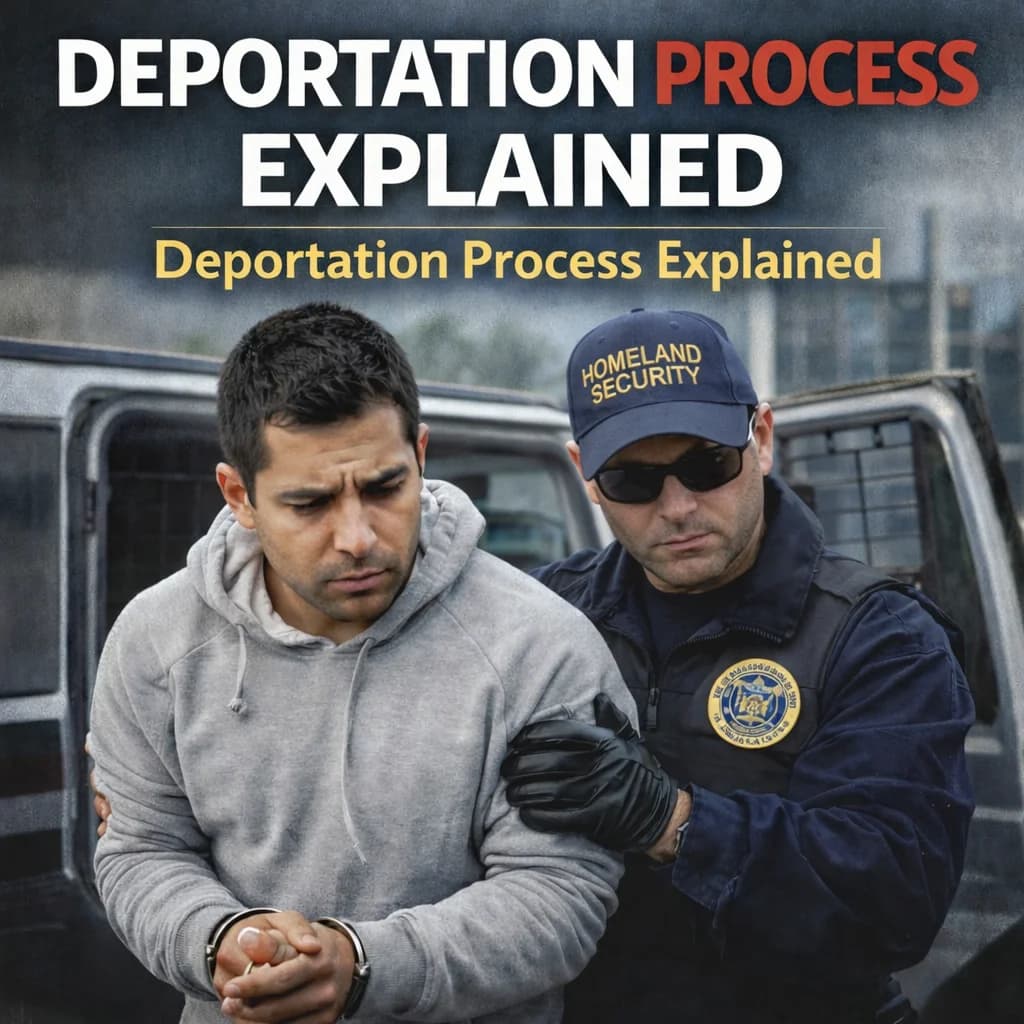
When You Get That Notice, Here Is What Happens Next
Getting a notice about deportation is one of those moments that rewires everything else happening in your life. If you or someone close to you has received one, the most useful thing you can do right now is understand the deportation process, the real sequence of events, not summaries or reassurances.
The formal term is removal, not deportation, though both mean the same thing. It does not happen overnight. There is a legal process with multiple stages, and at several of those stages, real options are available. Early mistakes can close them off, which is why knowing where you stand matters from the start.
How It Starts: The Notice to Appear (NTA)
The deportation process begins with a document called a Notice to Appear, commonly referred to as an NTA. It is the government's formal way of initiating removal proceedings. The NTA lists the specific charges against you, the legal basis for why the government believes you are removable, and instructs you to appear before an immigration judge.
An NTA can be issued by USCIS, Customs and Border Protection (CBP), or Immigration and Customs Enforcement (ICE). Common reasons include overstaying a visa, entering the country without authorization, certain criminal convictions, or other violations of immigration status.
One thing that catches people off guard: the NTA does not always include a hearing date. If
yours does not, you will receive a separate notice later. That hearing is not optional. If you fail to appear, an immigration judge can order your removal without you present.
The Immigration Court Hearing
Once your case is in immigration court, you will appear before an immigration judge who is part of the Department of Justice, not USCIS. Cases move through two types of hearings.
The first is a master calendar hearing, short and procedural. The judge reviews the charges, asks whether you are contesting the removal, and gets a sense of any relief you plan to seek. Most people have more than one before the case moves into its substantive phase.
The second is a merits hearing, also called an individual hearing. This is where you present your case: evidence, witnesses, and legal arguments for why you should be permitted to stay. It can run a full day or longer.
You have the right to hire an attorney. Unlike the criminal court, the government is not required to provide one. Immigration court is genuinely difficult to navigate without legal help, and the specific relief options available to you require someone who knows the system.
Applying for Relief from Removal
Being placed in removal proceedings does not mean the outcome is decided. Several legal pathways may allow you to remain in the U.S., depending on your circumstances.
Asylum and Related Protections
Asylum is available to people who can show a well-founded fear of persecution in their home country based on race, religion, nationality, political opinion, or membership in a particular social group. Two related protections, withholding of removal and relief under the Convention Against Torture, may apply even when a full asylum claim does not qualify.
Cancellation of Removal
Cancellation of removal is available to certain long-term residents. Non-LPRs generally need to show at least 10 years of continuous physical presence in the U.S., and that deportation would cause exceptional hardship to a qualifying U.S. citizen or green card-holding family member.
Adjustment of Status
Adjustment of status is a path for people who have an approved immigration petition through a U.S. citizen spouse or employer, for example, and who meet the eligibility requirements to apply for a green card even while in proceedings.
Which option applies depends on your immigration history, criminal record, how long you have been in the U.S., and your family ties here.
After a Removal Order: Appeals and Departure Options
A removal order is not necessarily the final word. You have the right to appeal to the Board of Immigration Appeals (BIA), which reviews immigration court decisions. You typically have 30 days from the order to file. If the BIA rules against you, appealing to the federal circuit courts is still possible, though that process is significantly more complex.
While an appeal is pending, you can request a stay of removal. A stay temporarily halts deportation while the appeal is reviewed. Without one, removal can move forward even if you have already filed.
In some situations, a person may be granted voluntary departure instead of a formal removal order. This means agreeing to leave the U.S. within a set timeframe, typically 60 to 120 days, at your own expense. The key advantage: a formal removal order triggers a 10-year bar on re-entering the U.S. Voluntary departure generally does not, though you would still need proper authorization before returning.
Voluntary departure is not the right choice for everyone. Agreeing to it can waive access to certain other forms of relief. This is a decision worth making with an attorney who knows your full situation.
When to Contact an Immigration Attorney
The honest answer is: as soon as you can. The deportation process has deadlines that are easy to miss and mistakes that are hard to undo.
Contact an immigration attorney immediately if any of the following apply:
You have received a Notice to Appear (NTA)
ICE has detained you or a family member
You missed an immigration court hearing and may have a removal order issued in your absence
You received a removal order and are deciding whether to appeal
You overstayed a visa and are unsure of your current legal exposure
You have a criminal conviction and are worried about how it affects your immigration status
Even if you are not in active proceedings, an attorney can assess whether your current situation puts you at risk. That conversation is worth far more than scrambling once the process has already started.
Conclusion
Each stage of the deportation process has a window for action. The decisions you make early and how quickly you make them shape what stays available to you later. Missing a deadline or agreeing to something without understanding the consequences can close doors permanently.
An immigration attorney who knows your history, your family situation, and how local immigration courts operate can give you a real assessment of where things stand. Greenway Lawyer can connect you with an experienced immigration lawyer according to your case.
FAQs
Can I be deported if I have a U.S. citizen spouse or child?
Having a U.S. citizen spouse does not automatically stop removal — it can open certain legal options, but whether those apply depends entirely on your history and eligibility. Talk to an attorney before assuming your family ties protect you.
What happens if I am detained by ICE?
If you are detained, the first thing to find out is whether a bond hearing is available. That is where a judge decides if you can be released while your case continues it is not guaranteed, but worth pursuing.
How long does the deportation process take?
It varies. Given the backlog in immigration courts, cases can take months to years. Cases with pending appeals take longer. Expedited removal, which applies in specific circumstances, can move much more quickly, sometimes within days.
Can I work while my removal case is pending?
Not without a separate work permit. You have to apply for an Employment Authorization Document (EAD) based on a qualifying category, and it is an entirely separate process; your removal case approval is not automatic.