
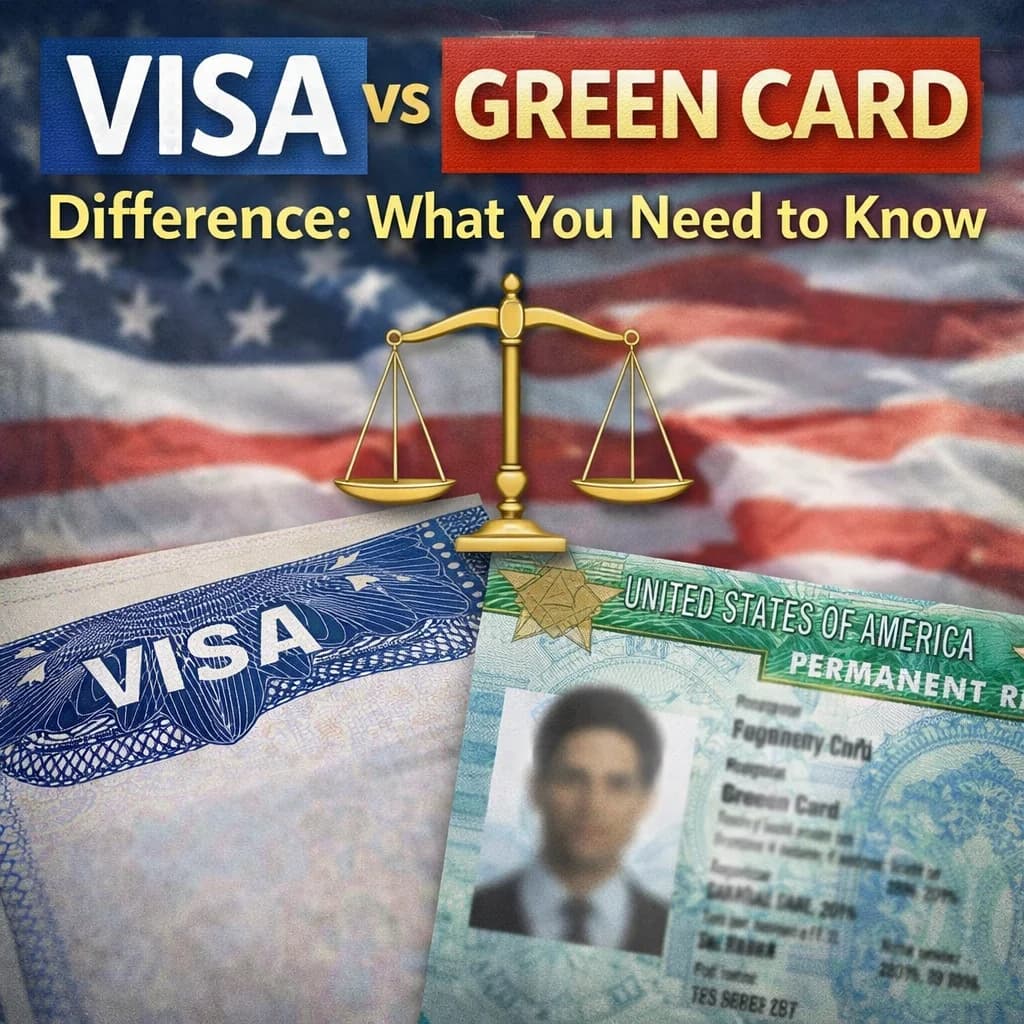
Visa vs Green Card Difference: What You Need to Know
Many people use the words “visa” and “green card” as if they mean the same thing, but they refer to two very different types of immigration status. A U.S. visa usually relates to travel and temporary entry for a specific purpose, while a green card shows that someone has lawful permanent resident status in the United States.
That distinction matters because the rights, limits, and long-term options are very different. If you misunderstand the visa vs green card difference, you may make the wrong plans about work, travel, or your future in the United States.
What Is the Visa vs Green Card Difference?
A visa is generally a document placed in a passport that allows a foreign national to travel to a U.S. port of entry and ask for admission for a specific purpose. The U.S. The Department of State explains that a visa does not guarantee entry, because Customs and Border Protection officers decide whether to admit someone at the border or airport.
A green card, officially called a Permanent Resident Card, shows that a person has been granted lawful permanent resident status. U.S. Citizenship and Immigration Services, or USCIS, explains that green card holders may live and work permanently in the United States as long as they maintain that status.
People confuse the two because both relate to immigration status and both may be part of the same broader journey. For some people, a visa is the first step before later applying for permanent residence, but the path depends on the person’s eligibility category.
Key Legal Differences Between a Visa and a Green Card
Length of Stay
Most visas are tied to a temporary purpose, such as tourism, study, or temporary work. The Department of State notes that there are more than 20 non-immigrant visa types for people traveling to the United States temporarily, while immigrant visas are for those coming to live permanently.
A green card is different because it gives lawful permanent resident status. The permanent residents may live in the United States permanently unless that status is abandoned or otherwise lost under immigration law.
Work Authorization
Some visa holders can work in the United States, but only if their visa category allows it and the terms are followed. USCIS explains that temporary nonimmigrant workers usually come under specific employment-based classifications, and those classifications often connect work permission to a petitioning employer or a limited purpose.
Green card holders generally have broader work rights. USCIS states that permanent residents have the right to live permanently in the United States and to work in the United States in most lawful jobs.
Immigration Status
A visa does not automatically make someone a permanent resident. It is connected to travel and admission for a defined reason, and the holder must continue to follow the terms of that category.
By contrast, a green card holder is considered a lawful permanent resident under U.S. immigration law. USCIS describes a lawful permanent resident as someone who has been legally granted permission to live in the United States permanently.
Path to Citizenship
A visa usually does not, by itself, create a direct path to citizenship. A green card can. USCIS explains that many lawful permanent residents may apply for naturalization after meeting eligibility requirements, and a common pathway is after maintaining permanent resident status for five years.
Common U.S. Visa Type
U.S. visas come in many categories because the purpose of travel matters under immigration law. The correct visa category depends on the purpose of the traveler’s visit to the United States.
Nonimmigrant visas
These are temporary visas. Common examples include:
B-1/B-2 visitor visas for business or tourism.
F-1 student visas for academic study.
Work visas such as H-1B, L-1, or O-1 are available for people coming to the United States for specialized employment or professional roles.
Immigrant visas
Some visas are issued to people who intend to immigrate permanently. The Department of State distinguishes immigrant visas from temporary visitor visas. USCIS explains that people may become permanent residents through family sponsorship, employment opportunities, refugee or asylum protection, or other legal eligibility categories.
How Someone May Move From a Visa to a Green Card
Some people enter the United States on a visa and later become eligible for a green card. That does not happen automatically. USCIS explains that a person usually must fit into a green card eligibility category and then follow the required process.
Common pathways include:
Family-based immigration, such as sponsorship by a U.S. citizen spouse, parent, or other qualifying family member.
Employment-based immigration, where a qualifying job or petition supports permanent residence.
Other protected or special categories, depending on the facts of the case and the law.
If the person is already in the United States and eligible, they may apply through Form I-485, which USCIS uses for adjustment of status to permanent residence. USCIS states that most green card applicants must complete at least an immigrant petition and a green card application, although the exact process depends on the category.
That is one reason this topic causes confusion. A person may start with a visa, but the legal goal later becomes permanent residence, and the rules for each step are different.
When You Should Speak With an Immigration Lawyer
The difference between a visa and a green card may seem simple at first. In practice, immigration rules often depend on timing, eligibility categories, and how a person originally entered the United States.
You may benefit from speaking with an immigration lawyer if:
Your visa is close to expiring, and you are unsure about your options.
You want to move from a temporary visa to permanent residency.
You plan to apply for adjustment of status through Form I-485.
Your immigration application has been delayed or denied.
You are unsure whether travel or employment changes could affect your status.
Immigration filings involve strict eligibility rules and procedures, and errors in paperwork or timing may delay a case or create additional complications.
Greenway Lawyer can assist you in reviewing your immigration scenario and realizing the possibilities that could be open. In case of doubts about your status or your further actions, it might be a good idea to get in touch with an experienced immigration lawyer and discuss your rights and duties before you make such a significant choice.
Conclusion: Understanding the Visa vs Green Card Difference
The difference between a visa and a green card is something every person who intends to visit, work, or permanently reside in the United States of America should note. A visa usually enables an individual to enter the United States on a temporary basis and with a certain objective, whereas a green card offers legal permanent residency plus additional rights to live and work in the United States.
Others are starting their immigration process with a visa and subsequently seeking a green card; however, the legal provisions of each phase differ. Immigration applications are usually based on connections with the family, job prospects, or other conditions of eligibility.
In case you are not sure about what immigration route is relevant to your case, Greenway Lawyer can assist you in finding the perfect procedure and determining your chances of obtaining a visa or permanent residence. Consulting an immigration attorney can assist you in preventing expensive errors and proceed with the process of understanding your legal rights better.