
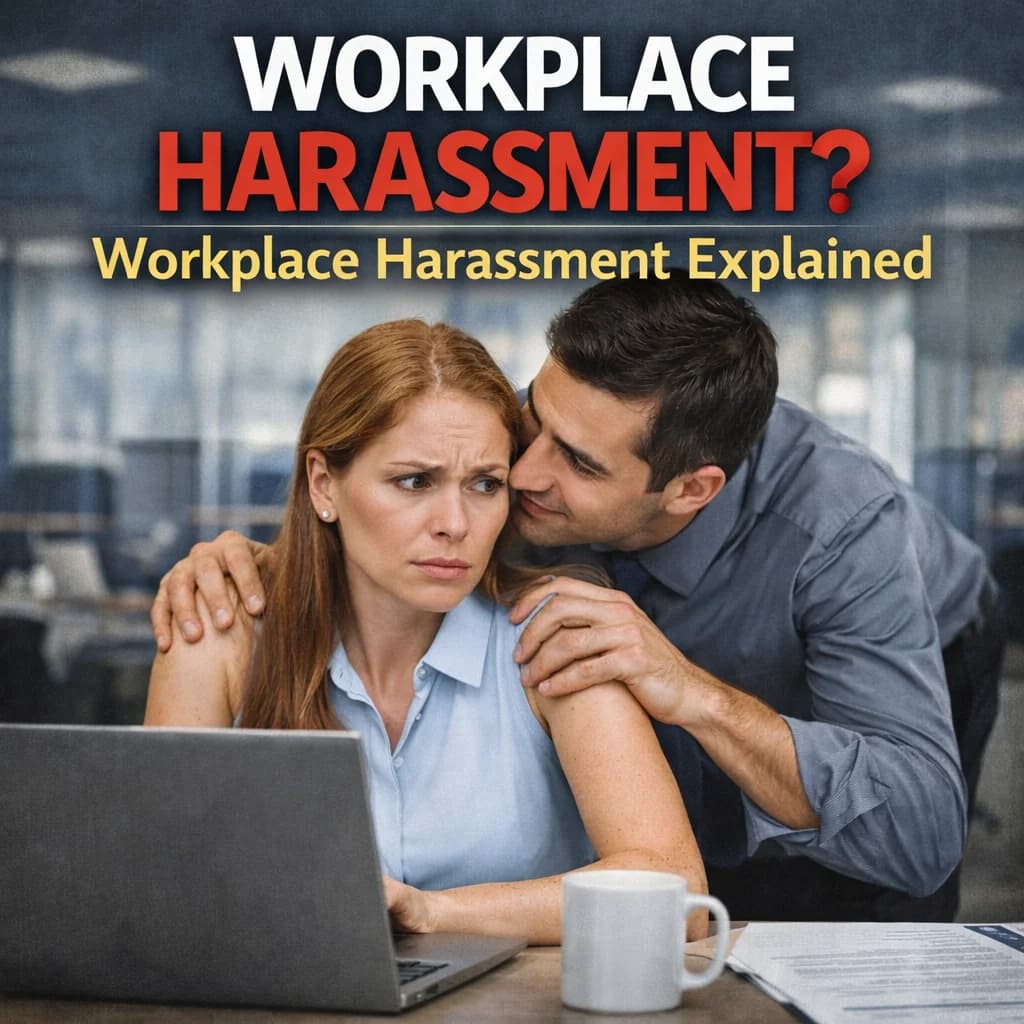
Workplace Harassment Explained
Workplace harassment can make it hard to do your job, feel safe at work, or trust the people around you. It can also leave employees unsure whether what happened was merely inappropriate or actually unlawful. Federal employment laws prohibit harassment when it targets someone because of a protected characteristic and becomes serious enough to affect their ability to work or their working conditions.
For many employees, the confusion starts with one basic question: what legally counts as workplace harassment?
This article explains what workplace harassment means, the main forms it can take, what steps employees often take next, and when speaking with an employment lawyer may help.
What Is Workplace Harassment?
Workplace harassment is not limited to rude behavior, office conflict, or a manager with poor people skills. Under federal law, harassment becomes unlawful when it targets someone because of a protected characteristic such as race, religion, sex, national origin, age, or disability, and the conduct is serious or frequent enough to create a hostile work environment or affect an employment decision.
Understanding that distinction helps explain why some workplace conduct violates the law while other behavior, although inappropriate, may not. The Equal Employment Opportunity Commission (EEOC) explains that petty slights, annoyances, and isolated incidents usually do not rise to the level of illegality unless the incident is extremely serious. Not every offensive comment gives rise to a legal claim, but repeated or serious conduct can cross the line into unlawful harassment.
Harassment can come from a supervisor, a co-worker, or even a non-employee such as a client or customer, depending on the facts. The law focuses less on job title alone and more on what happened, why it happened, and how it affected the workplace.
Types of Workplace Harassment
Hostile Work Environment
A hostile work environment usually involves unwelcome conduct that is serious or frequent enough to make the workplace intimidating, abusive, or offensive for a reasonable employee. Examples can include slurs, repeated insults, sexual comments, mocking a disability, threatening behavior, or conduct aimed at someone because of a protected characteristic.
The key issue is not whether a workplace feels tense in a general sense. The key question is whether the conduct targets a protected characteristic and whether it interferes with the employee’s ability to work or changes the conditions of employment.
Quid Pro Quo Harassment
Quid pro quo harassment is most often discussed in the context of sexual harassment. The EEOC describes it as unwelcome sexual conduct where accepting or rejecting the conduct is used to influence employment decisions such as hiring, firing, promotion, or scheduling.
A classic example is a supervisor suggesting that an employee must accept sexual advances to keep a job benefit or avoid a negative consequence. This conduct can be unlawful even if it occurs over a shorter period of time because the employment decision itself is tied directly to the conduct.
Common Examples of Workplace Harassment
Workplace harassment can look different from one situation to another, which is why employees sometimes struggle to determine whether the conduct crossed a legal line. Still, some patterns appear again and again in workplace complaints and EEOC guidance.
Common examples can include:
Repeated racial, ethnic, or religious slurs
unwelcome sexual comments, jokes, or touching
mocking someone’s disability or medical condition
offensive comments about pregnancy, age, or national origin
threats, intimidation, or humiliation tied to a protected trait
The legal impact of the behavior often depends on how often it occurred, how serious it was, who engaged in it, and how the employer responded after learning about it. That is one reason broad internet advice often fails people. Facts matter, timing matters, and documentation matters.
What Employees Can Do If Harassment Happens
An employee who believes harassment is happening often starts by documenting what occurred. That can include dates, locations, witnesses, messages, emails, and notes about what was said or done. Clear records can help show whether the conduct was isolated, repeated, escalating, or ignored after it was reported.
Many employees also report the conduct internally by using the employer’s complaint procedure, which may involve speaking with a manager, human resources, or another designated reporting contact. The EEOC encourages employers to maintain effective complaint procedures and to take prompt, appropriate action when complaints are made.
If the issue is not resolved internally, a worker may consider filing a charge with the EEOC. In many cases, the deadline is 180 days, although it may extend to 300 days if state or local laws also apply. In many harassment cases, the filing deadline is measured from the most recent incident.
Retaliation is another major concern. Federal law generally prohibits employers from punishing employees for reporting harassment or discrimination, participating in an investigation, or asserting workplace rights protected by equal employment laws.
When Workplace Harassment May Lead to Other Legal Issues
Harassment complaints sometimes overlap with other employment claims. A worker can report harassment and subsequently be demoted, disciplined, given fewer hours, or wrongfully terminated, which can also cause independent issues of retaliation or wrongful termination.
Because of this overlap, employees are required to be keen on documentation and reporting timelines. A legal matter, which starts as harassment, may escalate into a bigger employment lawsuit if the action taken by the employer leads to other issues.
When You Should Speak With an Employment Lawyer
A conversation with an employment lawyer can be productive during an ongoing harassment, when a complaint was disregarded, the employee feels that he or she was retaliated against because of a report. Legal advice can also be useful in cases where the behavior is recurrent, involves multiple supervisors, and the workplace policies are vague.
Since deadlines and legal theories are sometimes different, a consultation with an employment lawyer can help you know what to do. All of the cases depend on the case itself, so the advice of lawyers is not about the melodramatic courtroom vows, but more about getting to know the opportunities before they lose their dates.
Conclusion
Harassment at work is not just a form of unfair or offensive behavior. The question arises as a legal problem when the conduct that is associated with a covered characteristic is severe or is repeated to alter the terms and conditions of work, or when the decision to hire or dismiss an employee is based on the acceptance or rejection of the conduct.
Employees who suspect that they are being harassed need to take the matter seriously, write down the events, and remember the timeframes when the incident is reported and when it is filed.
Contact Greenway Lawyer and book an appointment to find out how we can assist you in defending your rights at the workplace.