
Introduction
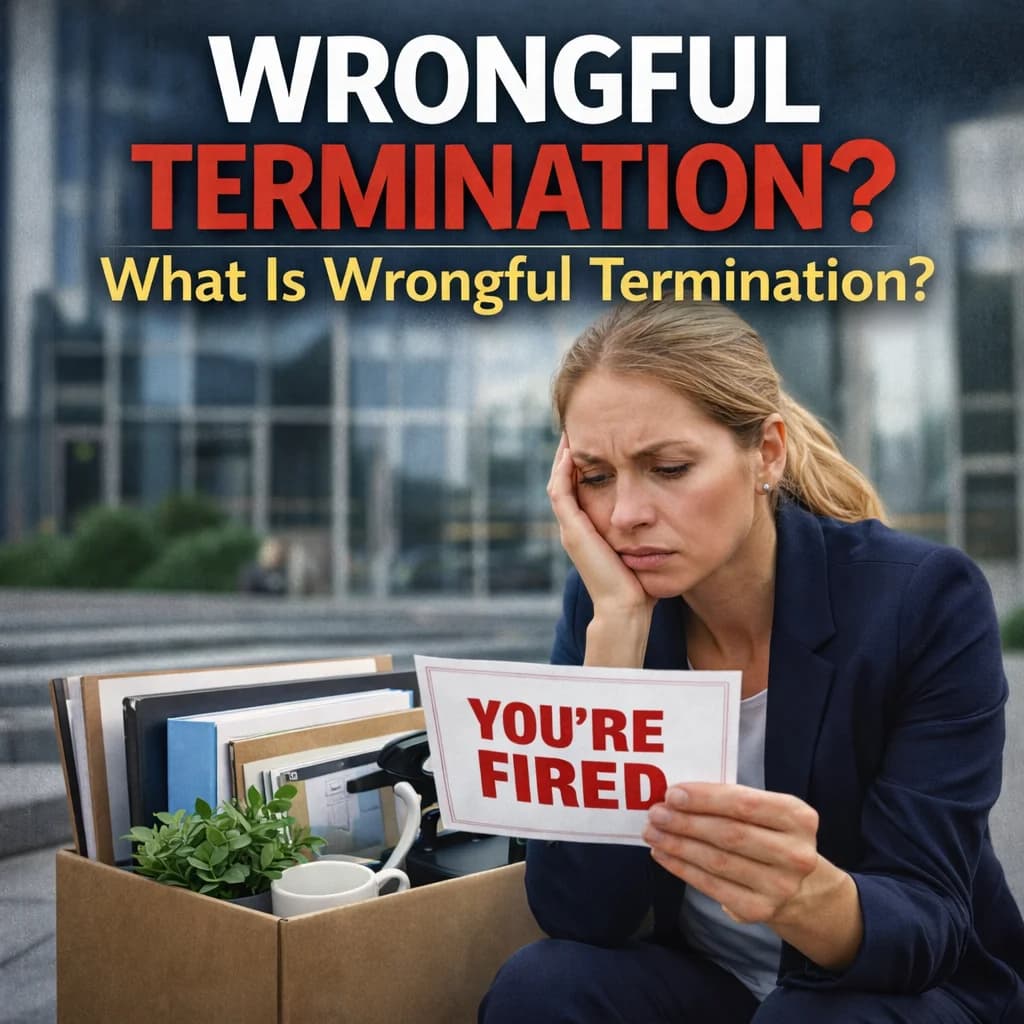
Losing your job can be upsetting, especially when it feels sudden or undeserved. But in the United States, not every unfair firing is illegal. Wrongful termination generally means an employer fired someone in a way that violates a law, breaks a contract, or punishes the employee for exercising a protected workplace right.
If you’re wondering whether your termination crosses that line, the most important thing to focus on is this: what was the real reason for the firing, and what facts support it?
Wrongful Termination Meaning
Wrongful termination usually refers to being fired for an unlawful reason. That can include being terminated because of discrimination, retaliation, protected leave, or a contract violation. It can also include being fired for refusing to do something illegal or for exercising certain rights your state protects.
A termination can feel unfair for many reasons: personality conflicts, inconsistent management, vague performance complaints, or office politics. The difference comes down to whether the employer’s reason (or behavior) breaks a law or an enforceable agreement.
At-Will Employment vs Wrongful Termination
Most U.S. workers are employed “at-will.” At-will employment means your employer can end your employment at any time, with or without notice, and often without giving a reason.
But at-will does not mean anything goes. Even in at-will jobs, an employer generally cannot fire you for illegal reasons. Think of it this way:
At-will controls how easily a job can end.
Wrongful termination focuses on why the job ended.
So an employer may be able to fire someone because “it’s not working out,” but they generally cannot fire someone because the person reported harassment, requested a disability accommodation, took protected medical leave, or belongs to a protected group and was targeted for that reason.
Common Reasons a Termination Can Be Wrongful
Wrongful termination claims often fall into a few major categories.
Discrimination
A firing can be unjustified where it occurred due to a safeguarded attribute like race, color, religion, sex (including pregnancy), national origin, age, disability, and other features that are covered by federal or state statute.
Sometimes discrimination is not so evident. Employers can use performance as an excuse when the actual issue is unequal treatment, biased remarks, or discipline being imposed that is only found after a protected characteristic is given attention (such as pregnancy or making a disability known).
Retaliation
Retaliation happens when an employer punishes someone for a protected action. This is one of the most common wrongful termination scenarios. Protected actions may include:
Reporting harassment or discrimination
Reporting unpaid wages or overtime issues
Reporting safety violations
Cooperating with an investigation
Whistleblowing in certain circumstances
A retaliation case is often related to timing. When you have complained, reported any misconduct, or been involved in an investigation and fired shortly after, timing can be important.
When it comes to retaliation over discrimination, employees tend to invoke or refer to the Equal Employment Opportunity Commission (EEOC).
Leave-related violations (FMLA)
The Family and Medical Leave Act (FMLA) gives some eligible employees job-protected leave for certain medical and family reasons. If you were fired because you requested FMLA leave, took approved leave, or tried to return to work afterward, your termination may be considered wrongful.
Contract or agreement violations
When you have a written employment contract or a union agreement and can only be terminated on a basis of “for cause” or certain steps must be followed, breaking those provisions can be wrongful termination. The policies and handbooks at work are sometimes also a factor, but again, it depends on how they are written and the state of the law.
Public policy violations
Certain states acknowledge wrongful termination claims when a firing breaches a so-called public policy, i.e., firing someone because of refusal to perform an illegal act, reporting some of the violations, or the exercise of rights under the law.
Wrongful Termination Examples
The following are some of the real-life situations that might justify a wrongful termination argument, based on the facts:
You lose your job soon after reporting the harassment at the workplace to Human Resources (HR).
You are fired following a disability accommodation request.
Being caught reporting unpaid wages or overtime, your employer fires you shortly thereafter.
You are sacked for declaring a pregnancy or parental leave.
You are fired because you do not want to falsify documents or engage in unlawful action.
Your employer abruptly accuses you of poor performance, even after good reviews and the absence of any prior discipline, and immediately after filing a complaint.
What Evidence Matters Most
Facts are usually determinative in the viability of a claim. In case the termination is not what you believe it should be, concentrate on gathering facts that will answer two questions: What did the employer say the reason was? And what facts support or contradict that reason?
The helpful evidence may consist of:
Separation notice or termination letter.
Emails, texts, or chat messages on performance, discipline or complaints.
Written feedback, goals, and performance reviews.
Employee handbook or other applicable policies.
Complaints history (emails to HR, internal tickets, reports)
Pay stubs and time records (concerning wage-related problems).
Name of witnesses (who observed or overheard important events).
Should you still have access to documents, save what you are allowed by law, and do not do anything that would make you go against the policies and confidentiality regulations of the workplace.
What to Do After Wrongful Termination
If you think you were wrongfully terminated, taking a few careful steps early can protect your options:
Write down your timeline while the details are fresh. Include dates, conversations, and anything that changed after you raised a complaint or requested leave.
Gather documents you already have: reviews, emails, pay records, written policies, and termination paperwork.
Keep communication professional if you contact your former employer. Angry messages can be used against you.
Avoid posting about the situation online.
Talk to an employment attorney quickly. Some claims have strict deadlines, especially if an agency filing is required.
FAQ
Is wrongful termination the same as being fired unfairly?
Not always. A termination can feel unfair but still be legal. Wrongful termination involves a violation of law, contract, or protected rights.
Can you sue for wrongful termination in an at-will state?
Yes, if the termination involved an illegal reason such as discrimination, retaliation, or a contract violation.
How long do you have to file a wrongful termination claim?
Deadlines vary depending on the claim type and state. Some matters require fast action, especially if an agency filing is involved.
Conclusion
Wrongful termination does not concern whether a termination was not fair; it involves whether the termination breached the law, a legally binding agreement, or a secured right in the workplace. When the reason provided is not correlated with the facts, when the timing is suspicious, or when you were dismissed as a result of reporting a work-related problem, it might be time to have a professional assessment of your case.
Greenway Lawyer can assist you in connecting with the right attorney to meet your needs in case you are confused about your choices or do not know where to find an employment lawyer.